


Origin
From the Ancient Tea Forests of Yiwu.

Yiwu Mountain, Yunnan — Terraced Arbor Forest Above the Cloud Line.
Sheng Pu-erh comes from Yiwu, in the southern reaches of Yunnan province. The trees grow slowly there — some of the source trees are several hundred years old, ours on hillsides above 1,800 metres. Altitude is the lever. Slower leaves hold more amino acids. More L-theanine. Cleaner caffeine.
“Sheng” means raw. The leaves are picked in spring, wilted in the sun, briefly fired in a wok to halt enzymatic browning, then sun-dried and compressed into cakes. From there, the tea ages — slowly, in dry mountain air. Our Spring 2026 lot is young raw pu-erh. Bright. Floral. Direct.
For most of its history, this wasn’t a category. It was a morning. Yunnan mountain villages drank it before work — strong, clean caffeine to start the day, with the kind of structure that doesn’t ask you to eat first. Workers brewed it in a thermos and refilled the leaves three or four times before lunch. The flask itself was the protocol; we gave it a method.
The 7th-century trade routes carried Yiwu pu-erh north and east on horseback. The compressed cake was an engineering solution — easier to transport, slower to spoil, and (it turned out) better-tasting after the journey. Centuries of natural aging happened by accident, then on purpose. The category we now call pu-erh was a logistics artifact that became a tradition.
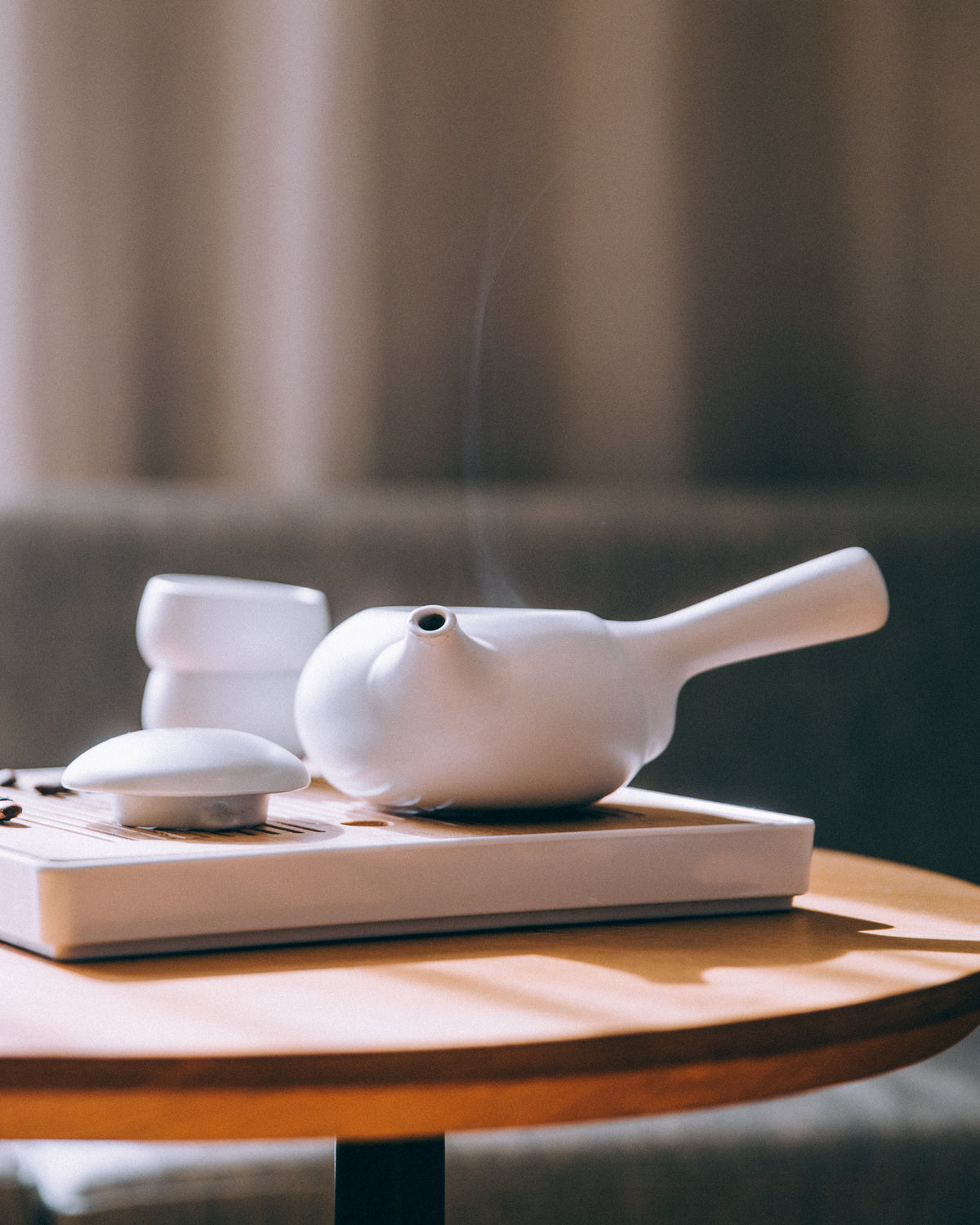
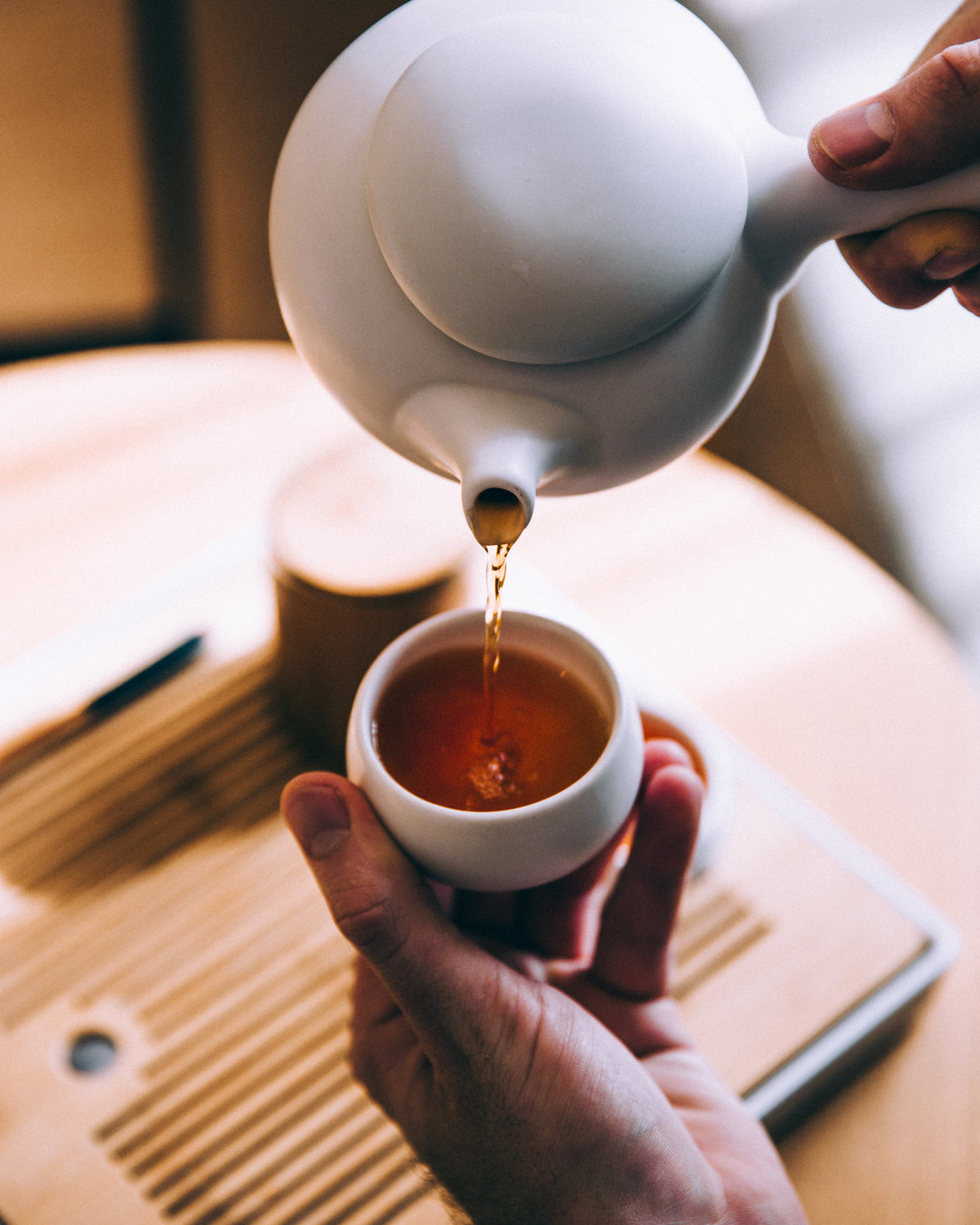
In the cup, young Sheng pulls floral first — orchid, dry sage, a green-mineral note that flickers on the tongue. The hui gan — the returning sweetness, after the swallow — is the cleanest of the three teas in our protocol. That’s where the brand name comes from. The cup finishes. Then the sweetness arrives. You feel it at the back of the throat thirty seconds later.
Why morning: the compressed-cake structure breaks open in steeping. The first 30-second steep delivers roughly a third of the available caffeine. Each subsequent steep adds incrementally. By the end of the session, you’ve drunk what your espresso would have given you in one minute — released across forty.
That is the difference between a spike and a session.
This is the tea that replaces the cup most people resent. Not the Saturday-morning espresso made with the kettle whistling. The Tuesday 7:14 a.m. cup, the one needed to write the deck. Sheng Pu-erh, gongfu-brewed at 90°C across five steeps, does that job. Without the 10 a.m. cliff.
Sheng alone is a good morning. With the midday Da Hong Pao and evening Shou Mei, it is a day.