


Origin
From the Cliffs of Wuyi

Yiwu Mountain, Yunnan — Terraced Arbor Forest Above the Cloud Line.
Da Hong Pao means “Big Red Robe.” The story is Ming dynasty. A scholar passing through the Wuyi Mountains in Fujian fell ill on the road, was revived by tea brewed from six mother trees on a rock cliff, and on reaching the capital the next year, sent his ceremonial red robe back to drape over the bushes that had saved him. The trees are real — they still stand on Mount Wuyi, photographed and protected. Production from the originals stopped in 2005. Everything sold today comes from cuttings.
Wuyi is a UNESCO terrain — vertical rock faces, mineral soil, and fog that settles late into the morning. The grade designation that matters is Zhengyan, which translates literally as “true cliff” — tea grown on the rock terraces themselves, not on the lower-elevation flats that ring the mountain. Our lot is Zhengyan. The mineral character in the cup is the rock — leached through the leaf during growing, concentrated in the cup.
What separates a Da Hong Pao from any other oolong is the roast. After the leaves are partially oxidised and rolled, they go into bamboo baskets above pinewood charcoal at low heat for hours. Then they rest. Then they go back over the charcoal for another pass. The full cycle is repeated three to six times across months. Each pass deepens the flavour and reduces moisture. The roast level you taste in the cup is the master’s signature — too light and the cup is grassy; too heavy and it tastes scorched. The line between the two is held by hand.
This is a craft that takes forty years to learn. In Wuyi, charcoal roasting still moves between masters and apprentices the old way — the apprentice stays beside the pit through firing windows that can last fourteen hours straight, learning the pit’s voice.
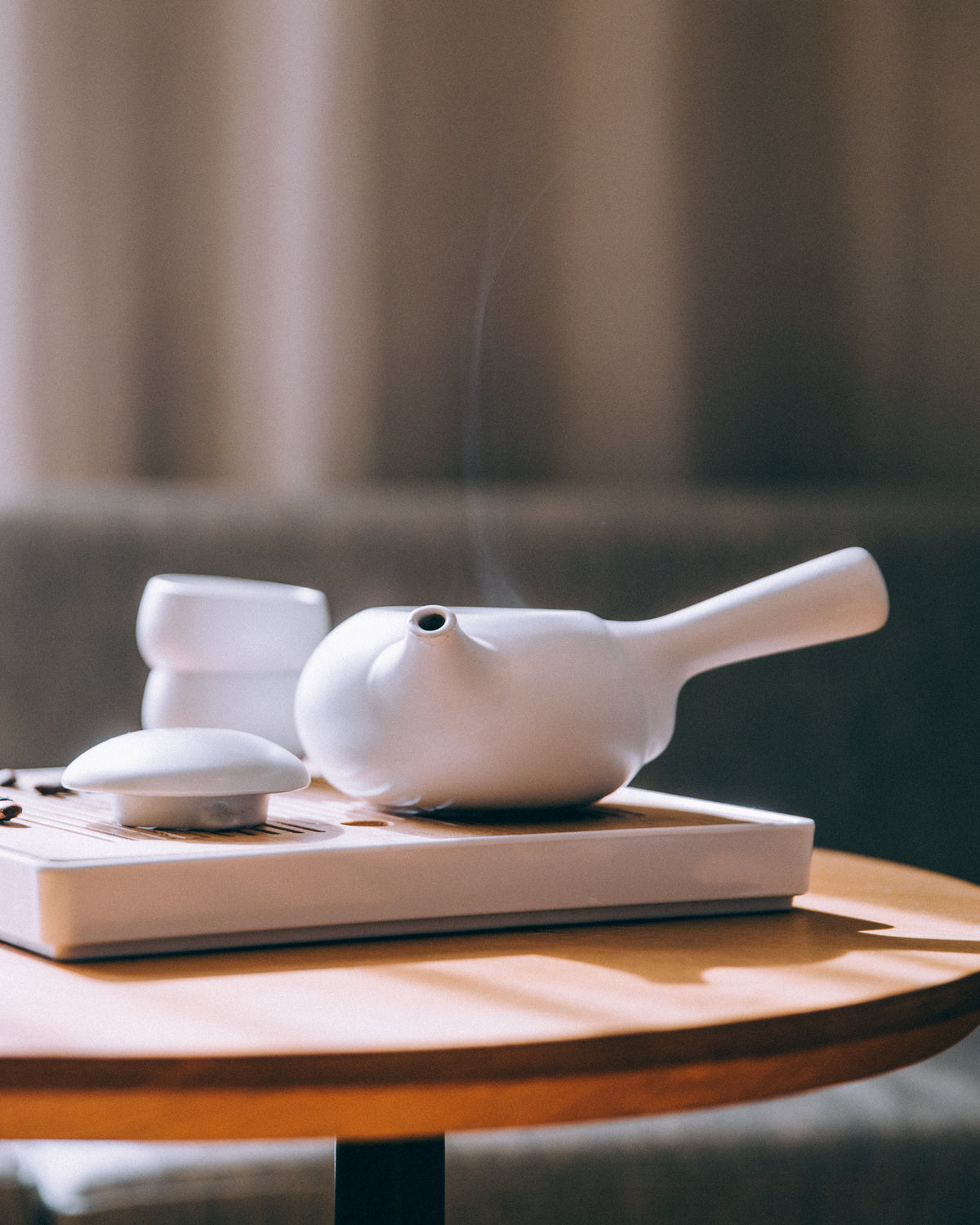
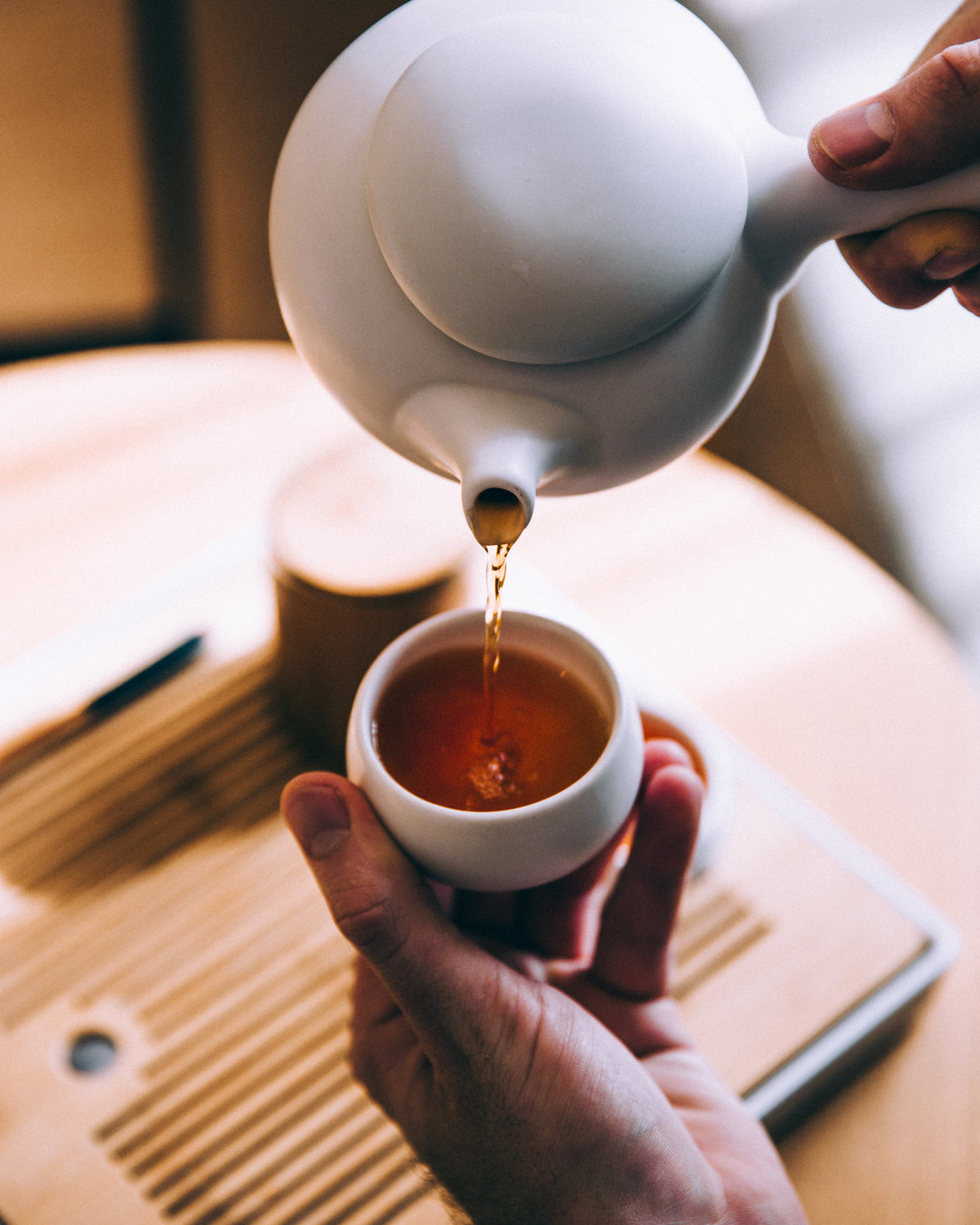
In the cup, you get the roast first — toasted nut, charcoal warmth, a baking-spice register that runs across the tongue. Underneath that, mineral. Underneath the mineral, stone fruit — longan, dried apricot, and sometimes cinnamon bark. Five steeps pull each layer out in sequence. The first steep is roast and stone. By the third steep, the mineral is louder. By steep five, the cup is sweet and quiet.
This is the midday tea. Caffeine still meaningful — the kind that lifts you out of the post-lunch trough without putting you back on the morning spike. The roast itself slows the cup down. The nose registers the warmth before the caffeine hits the brain. That pacing is the protocol working.
Sheng is the start of the day. Da Hong Pao is what carries it.